
Introduction
Most people brush their teeth daily but still end up with cavities, bad breath, gum bleeding, or expensive dental treatments. The reason is simple — brushing alone cleans only about 60% of your tooth surfaces. The remaining areas, especially between the teeth, become the perfect hiding place for food particles, plaque, and bacteria. This is where flossing becomes essential.
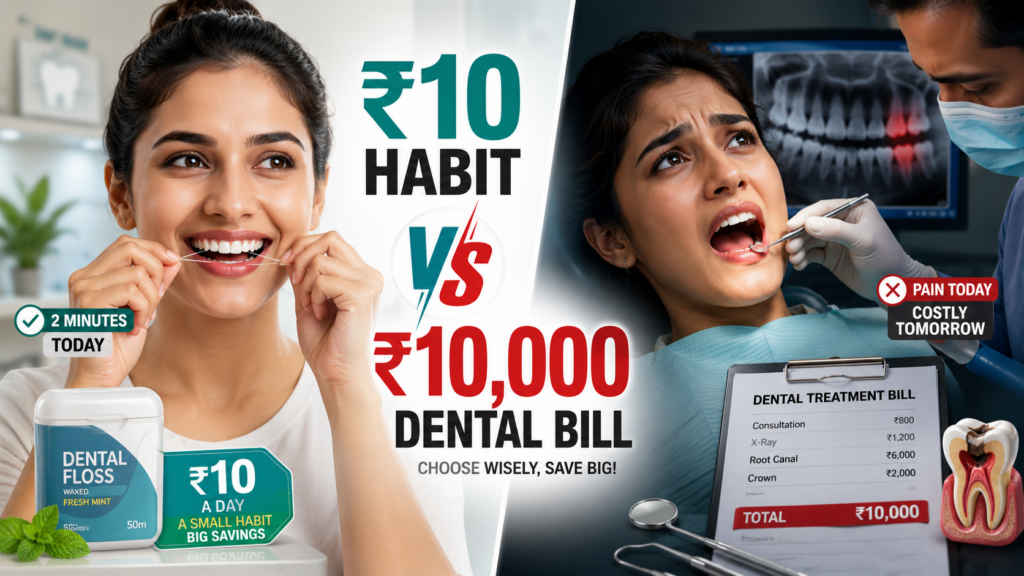
Spending just ₹10 a day on dental floss can help you avoid dental bills that may cost ₹10,000 or more later. A small daily habit can save your teeth, your confidence, and your money.
Why Brushing Alone Is Not Enough
Your toothbrush cannot properly reach the tight spaces between teeth. Even expensive electric toothbrushes struggle to remove plaque trapped in these areas. When food stays stuck between teeth for hours, bacteria begin producing acids that slowly damage the enamel.
Over time, this leads to:
Cavities between teeth
Bad breath
Gum swelling and bleeding
Tooth sensitivity
Gum disease
Root infections
Many patients think they have “sudden cavities,” but the damage usually develops slowly in the hidden areas between teeth where brushing cannot clean effectively.
What Exactly Does Flossing Do?
Flossing removes food particles and sticky plaque from areas your toothbrush misses. It cleans the sides of the teeth and the gum line, preventing bacteria from multiplying.
Daily flossing helps:
Prevent cavities between teeth
Reduce gum inflammation
Stop bleeding gums
Maintain fresh breath
Prevent tartar buildup
Protect expensive dental work like crowns and implants
Think of flossing as cleaning the corners of your house. If ignored, dirt keeps collecting until major cleaning becomes necessary.
The ₹10 vs ₹10,000 Reality
Many people avoid flossing because they feel it takes extra effort or seems unnecessary. But skipping flossing often leads to treatments that are painful and expensive.
preventive care is always cheaper than treatment. Dentists repeatedly see patients who spend thousands fixing problems that could have been avoided with simple oral hygiene habits.
Signs You Need to Start Flossing Immediately
If you notice any of these symptoms, plaque buildup may already be affecting your gums and teeth:
Bleeding while brushing
Food getting stuck between teeth
Persistent bad breath
Yellow deposits near gums
Swollen or red gums
Sensitivity between teeth
Ignoring these warning signs can eventually lead to tooth decay and gum infections.
Best Time and Correct Way to Floss
The ideal time to floss is before bedtime because bacteria become more active overnight. Cleaning between your teeth before sleeping prevents plaque from sitting for hours.
Simple Flossing Steps
Take around 18 inches of floss
Gently slide it between teeth
Curve it into a “C” shape around each tooth
Move it up and down carefully
Repeat for every tooth
Never snap the floss aggressively into the gums because it can cause irritation.
Is Water Flosser Better Than Regular Floss?
Water flossers are useful, especially for people with braces, implants, or sensitive gums. However, traditional floss still remains highly effective for physically removing sticky plaque from tight contact areas.
Many dentists recommend combining both methods for maximum oral hygiene.
Flossing for Children and Adults
Flossing is not only for adults. Children also develop cavities between teeth, especially after consuming chocolates, chips, and sugary snacks. Teaching flossing habits early can prevent future dental fear and expensive treatments.
Parents who introduce flossing at a young age often help their children maintain healthier smiles for life.
Common Myths About Flossing
“My gums bleed when I floss, so I should stop.”
Actually, bleeding gums usually indicate inflammation caused by plaque buildup. Regular gentle flossing often reduces bleeding within a few days.
“I brush twice daily, so flossing is unnecessary.”
Brushing cleans tooth surfaces, but flossing cleans between teeth. Both are essential for complete oral care.
“Flossing creates gaps between teeth.”
This is false. Flossing removes trapped debris and swollen gum tissue, making teeth feel cleaner — not separated.
Final Thoughts
Flossing may seem like a small habit, but its long-term impact is massive. Just a few minutes daily can protect your teeth from decay, save thousands in dental treatments, and help you maintain a healthy smile for years.
The choice is simple:
Spend ₹10 today on prevention
or
Spend ₹10,000 tomorrow on treatment.
Your future smile depends on the habits you build today.